How This Report Works
Understanding the Heatmap
The heatmap in this report shows where dominant aircraft noise originates based on your specific location. Colors indicate total noise exposure at your location. Rather than measuring the loudness of a single aircraft, the score reflects how often you'll experience aircraft noise—from green (infrequent) to red (consistent throughout the day).
Areas without shading do not mean there are no aircraft flying through them. Rather, they indicate aircraft in those areas are too far away or at too high an altitude to be heard from your location. A jet at 35,000 feet passing 30 miles away, for example, produces no meaningful noise at ground level and will not appear on your heatmap.
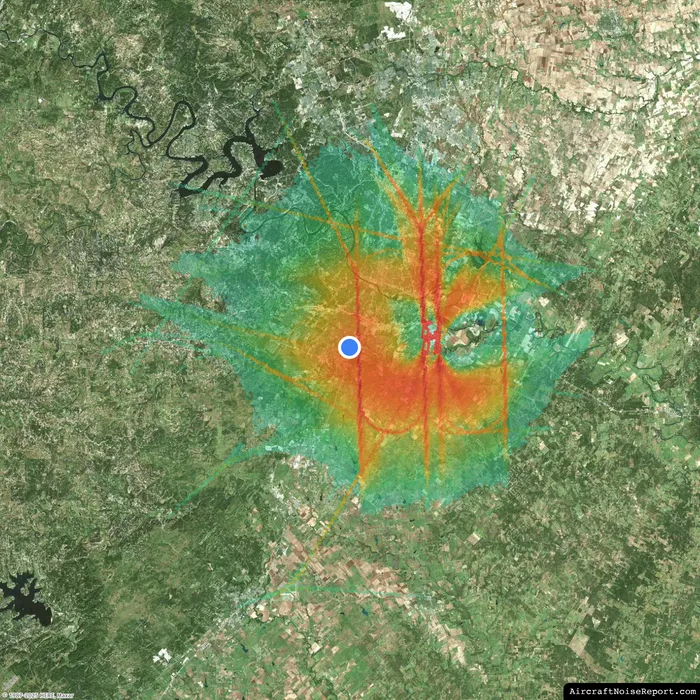
Sample heatmap showing aircraft noise exposure near an international airport
3D Sound Analysis with Slant Range
Unlike simple flight path maps that only show where aircraft travel, this report calculates the actual three-dimensional distance between your location and each aircraft. This measurement is called "slant range" and combines both horizontal distance and altitude.
Consider this example: A commercial jet cruising at 30,000 feet and 15 miles away can still be audible at your location because large jets are powerful and the slant range is about 16 miles. Meanwhile, a small Cessna at 2,000 feet but only 5 miles away may not appear on your heatmap at all—small propeller planes are much quieter and become inaudible beyond a few miles.
This physics-based approach ensures the report reflects what you will actually hear, not just where aircraft happen to fly.
More Than Flight Tracks
Traditional flight path analysis tells you "aircraft fly over this area." This report answers a more useful question: "What will I actually hear at this location?"
Our model accounts for:
- Aircraft type — Military jets and helicopters are significantly louder than small propeller planes
- Distance in 3D space — Both altitude and ground distance determine how much sound reaches you
- Flight frequency — Daily patterns matter; one loud aircraft is different from hundreds
The result is a true sound exposure analysis calibrated to your specific location—not just a map of where aircraft go.
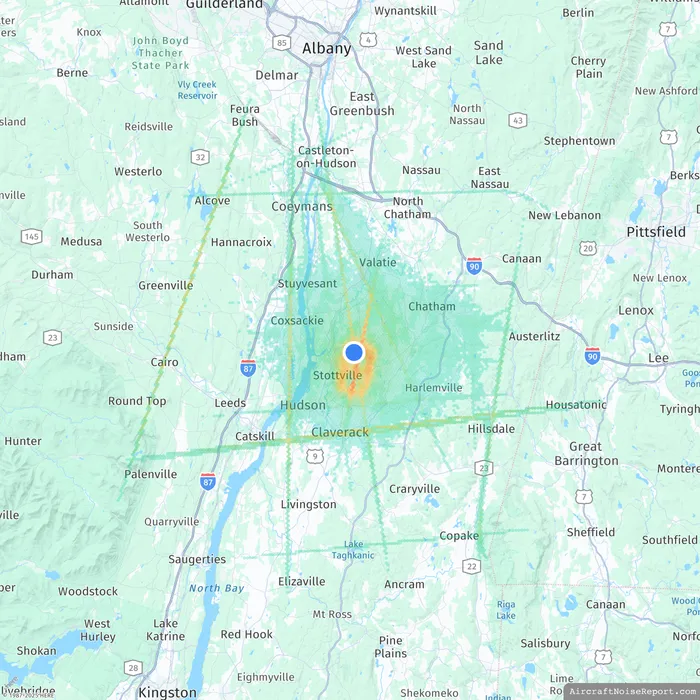
Sample heatmap showing aircraft noise exposure near a small rural airport
Data Sources
Our analysis is based on over 34 billion ADS-B flight records, capturing real aircraft positions over extended time periods. This comprehensive dataset allows us to identify patterns that single-day snapshots would miss, including seasonal variations and day-of-week differences.